|
{Stability of leadership is widely praised in Asia,
even if it isn't always widely practiced. Some of
Asia's most successful countries have leaders and
elder statesmen of long tenure: Indonesia's Suharto,
Singapore's Lee Kuan Yew, Malaysia's Mahathir Mohamad,
China's Deng Xiaoping. Some of its most successful
companies, likewise, are run by founder figures who
stayed the course, men like Li Ka-shing of Hong Kong's
Cheung Kong (Holdings) Ltd., Chung Ju-Yung of South
Korea's Hyundai Group and Kazuo Inamori of Japan's
Kyocera Corp.
But every institution must eventually have its changing
of the guard. A new generation of Asian-Pacific leaders
waits in the wings. The men and women in the region
who will be tomorrow's movers and shakers are a disparate
lot, some in their twenties or thirties, some already
middle-aged and beyond; some the scions of powerful
families; some the leaders of companies and institutions
that are small today but will be big tomorrow. What
unites them is a common inheritance: The responsibility
to make the tough future decisions that will either
ensure the region's peace and prosperity or consign
it to tribulation and torment.
Who are these leaders of tomorrow? Predictions are
hazardous, especially in a rapidly developing region.
But whether because of their cleverness or their connections,
some of those who could well be tomorrow's leaders
are already identifiable. This is the first of an
occasional series of articles in which The Asian Wall
Street Journal looks at the generation ahead and what
its rise might mean for the region.}
HONG KONG -- At 1,500 meters, Richard Li
pulled back on the controls of the ultralight aircraft
until the heavens rolled beneath his feet and the
South China Sea appeared overhead.
From the ground, his colleagues at Star TV -- the
troops, as Mr. Li calls them -- heard only the distant
buzz of the tiny craft as it completed one graceful
loop, then another. What they didn't hear were the
screams of Alex Zilo, a Star programming executive
riding shotgun with Mr. Li.
"He was someone to be identified out of the
group for some encouragement," says Mr. Li, adding
that he wanted to do something Mr. Zilo would remember.
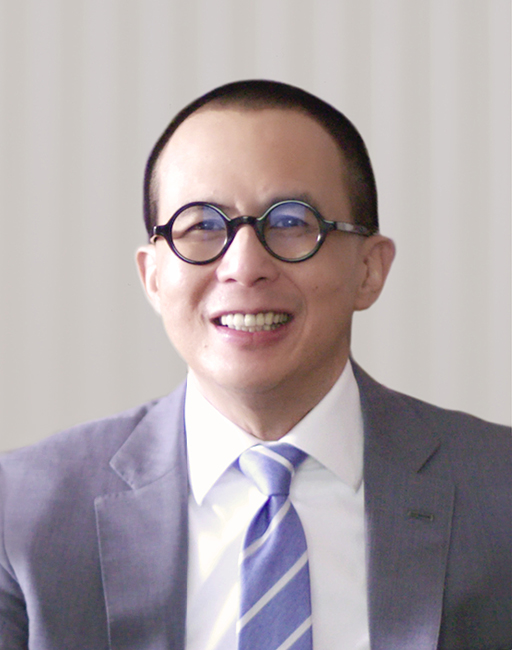
Mr. Li, 26 years old, has surprised many people
since his return to Hong Kong from Canada 3 1/2 years
ago. Heir with his older brother, Victor, to one of
Asia's biggest fortunes, he was widely regarded as
just another rich man's son when he arrived here after
10 years abroad. Only the fame of his father, businessman
Li Ka-shing, set him apart.
But in his role as creator of Star TV, Asia's first
satellite television service, the young Mr. Li has
won grudging respect. The sale of a majority stake
in Star to media magnate Rupert Murdoch in July for
a profit of about US$400 million won him even more.
These achievements, and the energy and focus he brought
to them, suggest that Mr. Li may have what it takes
to become one of the region's leading lights in the
decades to come.
If so, he would be somewhat of a rarity. Bankruptcy
courts around the world are littered with the failures
of billionaire sons. And the Asian custom of passing
control of business empires along family lines has
made the region particularly vulnerable to second-generation
weaknesses. As a new generation takes over from the
builders of Asia's prosperity, few of its designated
heirs have distinguished themselves as anything more
than able custodians.
The empire the Li brothers stand to inherit is valued
today at more than US$8 billion. It spans Canada,
China and much of Southeast Asia, and it includes
controlling stakes in Hutchison Whampoa Ltd. and Cheung
Kong (Holdings) Ltd., two of Hong Kong's largest listed
companies.
More than his brother, Richard has stepped forward
as an aggressive achiever bent on repeating the successes
of his 65-year-old father, who dropped out of middle
school to support his widowed mother two siblings.
Richard recently turned down an offer from his father
to run Hutchison Whampoa, a diversified company with
sales of HK$21 billion a year. Instead, he plans to
start a new technology-based company -- the details
of which are to be announced soon -- with the profits
earned from the Star sale.
He is a risk taker, but isn't reckless. Already
an experienced pilot, he spent hours practicing the
aviation stunt he pulled with Mr. Zilo, who is in
his early 40s. He had the airplane equipped with a
parachute and balanced according to Mr. Zilo's weight,
and even took out an insurance policy on Mr. Zilo's
life.
He moves easily among the world's most powerful
business leaders. And, like his father, he works obsessively.
"It's a family religion," says Steve Moss,
a member of Star's founding team. Adds Mr. Zilo: "He's
a forty-year-old in a twenty-six-year-old body."
However, Richard himself says making money alone
isn't enough to hold his interest. "I am not
going to spend my life doing things that I'm not intrigued
with and that are just about making money," he
says.
His critics attribute his early success largely
to his father's power. To them, he is arrogant, "rules
by fear" and is quick to humiliate subordinates.
They doubt he can maintain the frenetic pace he kept
up at Star, and argue that he will find it increasingly
difficult to top his achievements to date. "He
may burn out if he keeps up this pace," says
a Hutchison executive.
Mr. Li, with a boyish face and an athletic build,
rarely steps out of his role as the young tycoon these
days. When he boarded an inflatable dinghy in Corsica
in July to ride out to Rupert Murdoch's yacht and
close the Star sale, he was dressed in a dark suit,
understated tie and tasseled loafers. His hair seldom
varies from a close crop; his barber is "my refuge,"
he says. Though he maintains a small coterie of close
friends with whom he truly unwinds, they see less
and less of him as his responsibilities grow.
His self-conscious mannerisms endear him to some
people and grate on others. Though educated in the
U.S., he speaks with a British accent. His sometimes
stiff deportment parodies the television image of
the billionaire boy: At a gathering of Stanford University
alumni last year on the Li family yacht, Richard arrived
via speedboat wearing white slacks, a blue blazer
and a white nautical cap.
Even Richard concedes that such outings are partly
for show. "You're acting for the waiters and
the waiters are acting for you," he says, referring
to a more recent visit to Nantucket Island, a blue-blood
resort off the coast of Massachusetts.
Nearly everyone agrees that Richard is under tremendous
pressure, from both his father and the close-knit,
conservative Hong Kong society to which his family
belongs. By his own admission, he would have been
content to remain abroad had his father not summoned
him home in early 1990.
Back in the colony, Richard quickly found his freedom
crimped by his fame as Li Ka-shing's son. When something
as innocuous as his dancing at a Janet Jackson concert
found its way into the gossip pages of the territory's
press, his father pointed it out. The message: Hong
Kong is watching, so behave. To tone down his image,
he gave up a Mercedes for a Toyota Camry, chauffeur-driven
nonetheless. Within a year of his return, however,
he moved out of his father's house and into an apartment
alone.
That independence isn't shared by Victor, 29, who
continues to live at the sprawling Li family home
on the plush south side of Hong Kong Island even after
his recent marriage. Though associates say Victor
is the crown prince of the Li empire, he has attracted
little attention to himself or his business pursuits,
other than in his role in the US$1.5 billion redevelopment
of Vancouver's Expo '86 site. "Victor is becoming
very much his father's deputy," says a senior
Cheung Kong executive.
People close to the family say Victor's position
has forced Richard to work harder for his father's
approval. Richard attributes the marked difference
between himself and his brother to his early exposure
to American culture. "I've been infected,"
he laughs.
He left Hong Kong at the age of 13 to attend prep
school in Menlo Park, California, where he was installed
alone in an apartment, without chaperone or maid (the
school took no boarders). With imperfect English and
only a handful of Asian-American classmates at the
school, his first couple of years abroad were stressful
and lonely. "I wasn't happy at all," he
says.
Later, he took jobs in town to augment his allowance,
scooping ice-cream behind the counter at Swenson's
and even working a couple of months on the night shift
at a local McDonald's. He says he took the jobs to
avoid asking his father for more cash.
After finishing prep school in 1983, he entered
Stanford, where he took a degree in computer engineering,
and then went to work as an investment banker at Gordon
Capital Corp., one of the top investment banks in
Canada. He was there for four years before his father
called him home.
|
Once here, Richard quickly latched onto satellite
television as the project he would use to prove himself,
drawing the attention of the press and skeptics eager
to see him fail.
Hutchison already owned a third of the AsiaSat I
satellite, and had been mulling ways to make use of
that stake when Richard visited the Hutchison Telecommunications
Ltd. division early in 1990. Smitten by the high-tech
wizardry of earthstations and transponders, Richard
called a meeting of the satellite team to decide whether
a satellite-TV concept was viable. If it was, Richard
would seek his father's backing.
The group gathered on a Friday afternoon in May
in Hutchison Telecom's offices. Richard arrived in
a polo shirt, looking even younger than his 23 years.
"We were thinking, `Who is this kid, other than
the boss's son?'" Mr. Zilo says.
It didn't take long for Richard to convince at least
some of his new colleagues otherwise. Mr. Zilo recounts
how the young Mr. Li absorbed details and asked demanding
questions, keeping up the momentum as the light dimmed
over the harbor outside. The meeting continued through
the night and into the next day. Catering platters
mounted in heaps around the room.
On Saturday night, the oldest of the men dropped
to the floor with exhaustion; his wife was summoned
to collect him. Finally, on Sunday morning, one of
the men reminded Richard that it was Mother's Day
and that some of those present had family obligations.
The meeting broke.
But by the time each arrived home, Richard had phoned
and invited them and their families for a day on the
Li family yacht. With the relatives entertained, the
satellite discussions resumed at sea.
"He had caught the fever," Mr. Zilo says.
That isn't surprising, given Richard's fascination
with gadgets. He flies remote-control model planes.
At Star, he had fiberoptic video lines installed between
his and four other company offices. A beep would sound
in Mr. Zilo's office, across Hong Kong harbor from
Star's headquarters, calling everyone present to attention
as Richard's face blinked onto a monitor.
"I love Star . . . because it is based on science,"
Richard says.
With an airtight business plan hammered out during
the Mother's Day meeting, Richard went to his father
for approval. The elder Mr. Li and Hutchison agreed
to share start-up costs, which eventually totaled
about US$110 million.
For the next three years, Richard applied himself
to his project with a passion that amazes even his
critics. Six months after his father signed off on
the business plan, Richard managed to coax a reluctant
Hong Kong government to grant Star a license to beam
its programming to the satellite from Hong Kong. By
April 1991, less than a year after Star's conception,
the first test signal -- a video of clouds moving
across a blue sky -- was bounced off the Asiasat satellite
back to the colony.
On April 14, Star broadcast its first preview channel,
and within eight months, all five of its channels,
delivered to viewers free of charge, were going 24
hours a day. Today, the service is received in 11.5
million households from Egypt to Indonesia and as
far north as Siberia.
By any measure, building Star from scratch in so
short a time was a gargantuan task. Certainly, Richard's
family background helped. For example, Cheung Kong
associates such as Hilton Hotels and Canadian Imperial
Bank signed on as Star's "founder advertisers,"
paying US$2 million for two-year ad packages that
included an opportunity to buy a sliver of equity
in Star. These deals rendered the fledgling company
viable -- and more attractive to potential buyers
-- from the start.
Still, Richard was by all accounts the driving force
behind Star. He ensconced himself in a 12th-floor
office in Hutchison House, the company's headquarters
in Hong Kong's Central business district, reserving
his penthouse office for non-Star business. A core
group of executives met Mondays and Thursdays for
as long as five hours at a stretch, debating issues
such as how to develop Hindi-language programming
and how to improve poor reception on Hong Kong televisions.
It was in these meetings that Richard built his
reputation for dogged determination, and for confrontation.
All-night work sessions weren't uncommon; sleeping
bags were kept on hand to bed down exhausted staff.
"There was a tremendous team spirit," says
Mr. Moss.
Gatherings often degenerated into shouting matches,
with Richard usually winning in the volume stakes.
Before long, talk of his bad temper coursed through
the halls of Star and into the Hong Kong rumor mill.
To his fans, these flares showed a gifted businessman
under pressure; to his critics, they were the tantrums
of a spoiled heir.
"He ruled by fear and humiliation," says
a former Star executive, who asked not to be identified
because of continuing business links to Mr. Li.
Some of the brightest sparks flew between Richard
and Simon Murray, then Hutchison's managing director.
At one meeting, according to others who attended,
Mr. Murray told Richard to "shut up." Richard
then grabbed Mr. Murray by the arms and shouted for
him to apologize. Face to face with Richard's unblinking
eyes and slightly hawkish nose, Mr. Murray asked the
young executive to remove his hands. He did. Both
men say they have since reconciled.
"Yes, there were humiliations, but it wasn't
personal," says Mr. Moss, the member of Star's
founding team. Mr. Moss maintains that Richard's exacting
attitude kept the group focused, and that "when
he wasn't there, everything would fall apart."
The same brusque manner that helped Richard to motivate
his staff often translated into hard-ball tactics
in outside business dealings. His bravado even helped
him in encounters with the formidable likes of Ted
Turner, founder of Turner Broadcasting Corp. When
Star was starting up, Richard flew to New York to
discuss programming cooperation with Mr. Turner and
other executives of the U.S. media giant. "These
guys thought, `Here comes this little Chinese kid.'
. . . They really put him down," says an investment
banker familiar with the episode.
But Richard rejected Mr. Turner's demand that Star
require subscribers to pay to receive the U.S. company's
Cable News Network, and subsequently signed up British
Broadcasting Corp. When the two men met months later
for breakfast at New York's Waldorf-Astoria Hotel,
Richard didn't hesitate to light one of his Salem
cigarettes while sitting across from Mr. Turner, an
avid anti-smoker.
"He can't be cowed," Mr. Moss says.
By July this year, with Star's free service up and
running and plans under way to launch four pay channels,
Richard seized his opportunity to cash out. When he
reached agreement with Mr. Murdoch's News Corp., he
was holding talks with five separate buyers.
People close to Richard say he has mellowed with
Star's success. After completing the sale, he gave
two round-trip tickets to each of the 600 people on
the company's staff for vacations in Phuket, Thailand;
Kota Kinabalu, Malaysia; or Cebu, the Philippines.
He also distributed big bonuses to a handful of key
individuals, including a few who had left the company
much earlier.
"He's changed a lot in the last two years,"
says Mr. Moss. "He's more considerate, more prepared
to listen."
For now, his attention is fixed on his new venture.
The as-yet-unnamed company, capitalized at US$400
million and formed with a core of executives that
include most of the original Star team, will focus
on infrastructure projects, particularly in high technology,
and strategic investments.
"Maybe when I'm thirty-five, I will have decided
that I want to call it quits and I don't want to be
in business, and I want some other form of challenge,"
he says.
Meanwhile, he can rest assured that he has already
helped shape Asia's future. After Richard and Mr.
Murdoch agreed on the Star deal, the News Corp. chief
arranged to have Richard flown back to Hong Kong to
notify the Chinese and Hong Kong authorities of the
deal before it was announced.
The Falcon 900 lost an engine over Uzbekistan in
Central Asia and had to land in Tashkent. Richard
rushed into the small airport terminal to draft notification
letters and work the phones while a replacement jet
was flown in from Paris. Nearby, a television played
silently. On the screen: MTV delivered via Star.
###
|