|
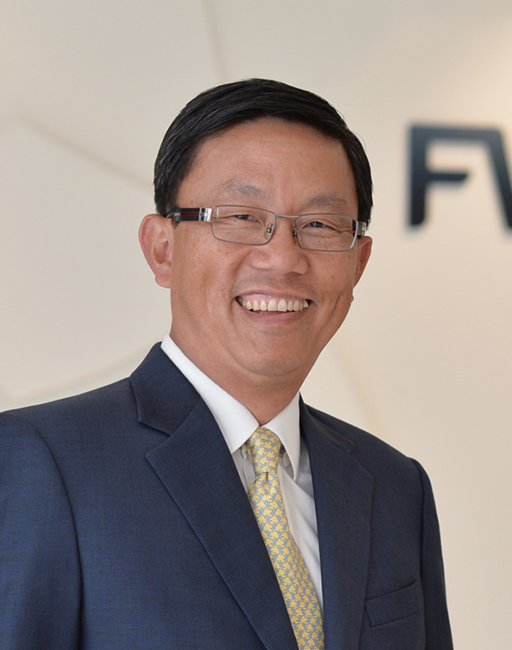
FOR once, the second son of Hongkong tycoon Mr Li
Ka-shing may be forgiven for looking smug. STAR TV
- the project Mr Li gave Richard to cut his teeth
on - is ... profitable.
A year after STAR's first test-signal was uplinked
to AsiaSat from its Hongkong transmitter and beamed
out over the vastness of Asia, he is happy to proclaim
his most startling success to date: advertising revenue
at US$120 million (HK$936 million) has overtaken the
STAR's total investment to date. "Including everything,"
says Mr Li, with a note of triumph.
The exact investment figure he is not prepared to
divulge. But it is less than US$100 million so far.
If what Mr Li says is the unvarnished truth, it does
more than confound the doubters and critics who prophesied
years of struggle. It is not merely a counter-blast
to the persistent rumours of empty advertising slots
and massive losses. It establishes a world record.
"It has to be the fastest break-even point in
TV history," says Dr Ernest Martin, senior lecturer
at the Baptist College School of Communications. "It's
a little surprising. It's a lot faster than satellite
services have pulled into profits elsewhere. If you
look at Sky (Mr Rupert Murdoch's British-based BSkyB
satellite service, which only recently turned the
corner into profitability after years of haemorrhaging
money), if you look at Super-Channel or what Ted Turner's
done at CNN (Cable News Network), it is fast.
"But it is possible. There's really no reason
for him to pull the wool over your eyes."
Making money so early is a big coup for Mr Li. But
it is far from his only success. Five channels are
on air, well ahead of schedule. The satellite is beaming
news, sport, music videos, Mandarin soap operas and
films 24 hours a day - and the service has proved
so popular in India, STAR is considering introducing
an all Hindi channel.
Meanwhile, STAR is expanding into homes across Asia
from Indonesia to the Middle East with a growth even
the gung-ho team at STAR TV had never expected.
Markets have opened up in the least likely places.
A survey of five nations carried out by marketing
and research consultant Frank Small and Associates
surprised even the always sanguine STAR management.
Taiwan, where STAR's services can be received by more
than a million households, was expected to be the
big one. But no one imagined it would be that big.
India, Israel and even Hongkong turned out to be
bigger markets than STAR had expected. Only Indonesia
disappointed with about 14,000 instead of the hoped-for
20,000. It is a technical problem, insists the deputy
chairman. Indonesia will not allow cabling. So, in
the main, one dish serves a single household.
Meanwhile, some things are a matter of presentation.
While it is reasonable to assume Mr Li has the amount
of advertising he claims, a glance at the product
on air confirms the critics' complaint that only a
relatively small portion - perhaps 20 per cent - of
the available advertising space has been filled.
Upmarket corporate advertising for chemical companies
and electronics giants induces uncontrollable yawns
on the BBC channel, which is aimed at an even more
select business elite than the top two per cent of
Asia's most highly-educated viewers expected to be
attracted by the other channels. A few advertisements
for brandy and luxury cars intersperse the sports
broadcasts and the music channel.
"That's irrelevant," says Mr Li. "I
can fill my slots completely at a price that's much
lower. It would be easy to lower the price but it's
not so easy to raise the price. We are holding our
price. And that will continue to be our strategy.
Our rate-card is unchanged."
But Mr Li is sure there is more advertising to come.
And Dr Martin supports his view. He dismisses the
pessimists' argument that multinational companies
are not ready for global advertising of the sort a
free-to-air, trans-frontier service like STAR needs
to survive. The big corporations, he says, are used
to thinking long-term, taking out advertising contracts
for a year at a time and using the latest communications
possibilities. DESPITE the successes, however, Mr
Li admits part of the reason he has done so spectacularly
well is the company's low level of initial investment.
He learned from the mistakes of other satellite broadcasters,
especially the British groups, and did not put all
his money up front. His creative staff, his post-production
suites, his transmission equipment were packed into
some of the cheapest new accommodation available,
a factory building in a run-down area of Hung Hom,
partly to keep costs low and partly to get the show
on the road quickly. If he had waited to have all
his facilities at the new Clearwater Bay site up and
running, "we'd be waiting to this June to get
on the air".
|
And he is the first to admit he cannot guarantee
to break even at all times. Soon there will be new
i nvestment in production and post-production facilities
at Clearwater Bay and the company has plans for further
expansion of the service, which will cost money. Total
projected investment is about US$300 million. "But
it's not all up front," says Mr Li.
And then, oh dear, there is that problem about Cantonese
and the limited access for viewers in Hongkong and
southern China. Without the use of the local language,
the potential for attracting new viewers is limited.
STAR TV has created a new sandwich class in Hongkong.
The majority of Hongkong people are too poor to live
in luxury buildings full of expatriates unbothered
by the lack of Cantonese and with satellite service
built into the management fee. But they are too rich
to live in public housing estates where Fortress has
been installing satellite dishes with the agreement
of the Housing Authority.
And once the service in the housing estates has been
running for a while, it will be interesting to see
how many mono-lingual households will bother to maintain
their subscription for a service available in English,
Mandarin and perhaps Hindi - but not in any language
they understand.
"You would be surprised," says Mr Li. "A
lot of them understand English even if they don't
speak it." Perhaps. But will they watch it?
The deputy chairman is tired of trotting out the
arguments for Cantonese: the awkwardness of explaining
to potential advertising and programming partners
why STAR's home government is so unsupportive, the
potential for building up the local programming industry,
the wealthy local audience so attractive to advertisers,
the vast market out there in southern China (it is
only in hotels where STAR TV is banned) ... If they
could get permission to broadcast in Cantonese, they
would have to consider producing their own programming.
And although it would be done in Shenzhen or Taiwan
to keep the costs down, there would need to be a lot
more local post-production and back-up work in Clearwater
Bay. But if Cantonese remains banned, it also reduces
the available programmes for Taiwan and other Chinese-speaking
markets, most of whom are happy to see the majority
of their programming dubbed from Cantonese originals.
As for whether STAR should win the pay TV franchise
in Hongkong, or even share it with Wharf Cable or
one of the other bidders, Mr Li is, perhaps with a
touch of bravado, claiming to be unbothered. With
signal compression about to offer 40 potential channels,
he is confident STAR will be able to offer free-to-air
and pay-TV services. If he is not allowed to sell
paid-for channels in Hongkong, he can still sell them
profitably elsewhere.
The worst that can happen is that Hongkong people
are not allowed to receive them. And unlike Wharf,
he is not afraid of competition on the Hongkong market.
"The one biggest regret of the past 12 months
is we spent too much time dealing with the Hongkong
scene. I am saying that if our team spent 50 per cent
of the time that we'd spent in Hongkong we'd have
produced virtually the same result with the Hongkong
Government. And we'd have for certain either developed
one more major market, or the major markets would
have more households already.
"We almost spent at one period 50 per cent of
our time just dealing with the Hongkong Government
.. The one major change I proposed this year is to
look at ourselves really regionally and not spend
so much time dealing with the Hongkong Government.
"I've not heard more unanimous agreement."
###
|