|
PCCW chairman believes incumbent has better chance
of lobbying Beijing on early democracy
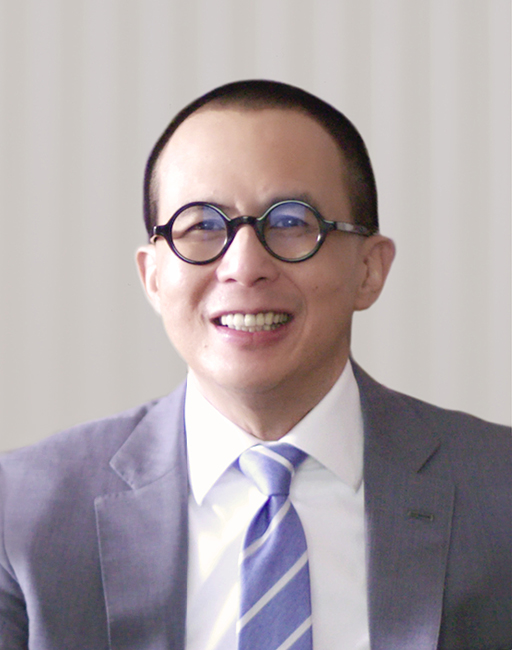
PCCW chairman Richard Li Tzar-kai, who championed
'real democracy' during his successful bid for a seat
on the 800-member panel that will elect the next chief
executive, has thrown his weight behind Donald Tsang
Yam-kuen.
Mr Li described Mr Tsang as an 'honest, effective
broker' who - compared with pan-democrat candidate
Alan Leong Kah-kit - had a better chance of lobbying
Beijing for its consent on early democracy.
'It's a very difficult decision,' he said. 'If Alan
Leong does not have enough nominations ... I will
definitely nominate him. I'd like to see a contested
election. You've already seen the benefits: each candidate
is making a lot of pledges.
'If I nominate Mr Leong, I also know it may help
strengthen the voice of democracy. But we all know
he has no chance of winning under a 'small-circle,
unfair election'.
'It [nominating him] is mere symbolism. But this
is not unimportant. Doing so will express the people's
aspiration for democracy to Beijing.'
Mr Li said he had sought and received a personal
pledge from Mr Tsang that he would do his best to
resolve the issue of universal suffrage in his second
term. 'I have no reason to doubt his credibility ...
If Beijing did not trust him, they would not have
given him the job.
|
'True, the introduction of universal suffrage needs
the consent of three parties: a two-thirds majority
of Legislative Council members, the consent of the
chief executive and Beijing's approval.
'We all know Beijing ultimately calls the shots.
It's not Donald's decision. Both he and Alan Leong
are honest brokers. But Donald will be more effective.
That's the only reason I nominated him,' he said,
adding that 'it has nothing to do' with business considerations.
Mr Li, the younger son of tycoon Li Ka-shing, won
a seat in the election
committee information technology subsector in December.
Richard Li has admitted he was in a minority in the
business community as far as the issue of universal
suffrage was concerned.
'I'm not worried that universal suffrage would adversely
affect the business environment. Look at the US, Canada,
UK and Japan.
'There won't be harmony if a government only represents
a certain segment of society. In Hong Kong, people
question whether our government only speaks for a
small group of people.
'You'll never be able to come clean so long as our
election system is not a real democracy. If the government
has legitimacy, you won't hear people keep saying
there's government-business collusion.'
The government has been accused of colluding with
businesses over projects including the Cyberport and
the West Kowloon Cultural District development.
###
|